

Altawell Global Profiles: Legacy presents concise profiles of influential thinkers, pioneers and leaders whose ideas continue to shape understanding across science, leadership, ethics, sustainability and global systems.
The Altawell Global Legacy reflects the foundational ideas and contributions that continue to shape thinking in sustainability, energy systems and governance. These perspectives provide the intellectual basis for the work developed across Altawell Global.
These foundational ideas continue to inform contemporary challenges and evolving strategies. Explore our Insights to see how these principles are applied in practice across sustainability, energy systems and governance.
Profiles
Buckminster Fuller (1895–1983)
Visionary systems thinker, architect, inventor and futurist
Richard Buckminster Fuller was one of the twentieth century’s most influential systems thinkers and innovators. He is best known for developing the geodesic dome and for advancing the concept of “Spaceship Earth,” which emphasised humanity’s shared responsibility for managing finite planetary resources.
Fuller believed that global challenges could be addressed through integrated design, technological innovation and systems-based thinking. His philosophy of “doing more with less” promoted resource efficiency, sustainability and intelligent design long before these concepts became central to environmental policy and sustainable development.
His work spanned architecture, engineering, education, design and futurism, influencing generations of researchers, policymakers, environmentalists and innovators. Fuller argued that humanity possessed the knowledge and technological capability to create a prosperous and sustainable future for all if resources were managed wisely and global systems were designed intelligently.
His legacy continues to influence sustainability strategy, systems thinking, circular economy principles, resource efficiency and long-term approaches to global development.
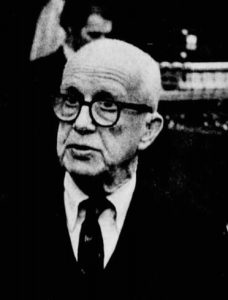
Donella H. Meadows (1941–2001)
Pioneer of Systems Thinking and Sustainability Science
Donella H. Meadows was a pioneering environmental scientist, systems analyst, and one of the most influential voices in sustainability and systems thinking. Her work fundamentally reshaped how complex global challenges—such as environmental degradation, resource depletion, and economic growth—are understood and addressed.
Meadows is best known as the lead author of The Limits to Growth (1972), a landmark study that used system dynamics modelling to explore the long-term consequences of exponential economic and population growth on a finite planet. The work challenged conventional assumptions about growth and highlighted the risks of overshooting ecological limits—an idea that remains central to contemporary sustainability discourse.
Beyond her early contributions, Meadows developed a profound framework for understanding complex systems. Her concept of “leverage points”—places within a system where a small shift can produce significant changes—has become a cornerstone in sustainability strategy, policy design, and organisational transformation.
Her work emphasised that sustainable change is not only technical but also structural and behavioural. She argued that real transformation requires rethinking system goals, information flows, and underlying paradigms—insights that continue to influence fields ranging from environmental policy to digital system design.
Meadows also played a key role in communicating complex ideas in accessible ways. Through her writings and teaching, she bridged the gap between scientific analysis and practical application, making systems thinking relevant to policymakers, organisations, and society at large.
Her legacy continues to shape how we approach sustainability, resilience, and systemic risk. In an increasingly interconnected and uncertain world, her insights remain essential for designing systems that are not only efficient, but adaptive, resilient, and aligned with long-term planetary boundaries.
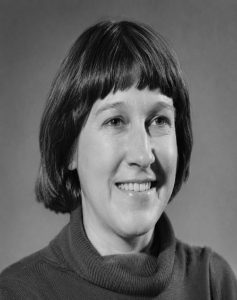
James Lovelock (1919–2022)
Pioneer of Earth system science and environmental systems thinking
James Ephraim Lovelock was a British scientist, inventor, and environmental thinker whose ideas significantly shaped modern understanding of the Earth as a complex, interconnected system. Through his pioneering research and bold intellectual vision, Lovelock helped transform the way scientists, policymakers, and society view the relationship between human activity and the planet.
Born in 1919 in Letchworth Garden City in the United Kingdom, Lovelock studied chemistry and later pursued interdisciplinary scientific research that bridged atmospheric science, biology, and environmental systems. Much of his career was spent as an independent scientist, working outside traditional academic institutions while collaborating with major research organisations, including NASA.
Lovelock is best known for proposing the Gaia hypothesis in the 1970s. This concept suggests that the Earth functions as a self-regulating system in which living organisms interact with the atmosphere, oceans, and geological processes to maintain conditions that support life. According to this perspective, the biosphere and the physical environment are deeply interconnected and together form a dynamic planetary system.
The Gaia hypothesis stimulated new thinking across fields such as Earth system science, climate science, and environmental studies. It encouraged researchers to examine the planet not simply as a collection of isolated ecosystems but as an integrated system where biological and physical processes influence one another.
In addition to theoretical contributions, Lovelock developed important scientific instruments, including the electron capture detector, which became a crucial tool for detecting trace atmospheric pollutants. This invention played a major role in identifying the global spread of harmful chemicals such as chlorofluorocarbons and pesticides.
Throughout his life, Lovelock spoke openly about the challenges posed by climate change and environmental degradation. His work emphasised the importance of understanding planetary systems and recognising that human civilisation is deeply embedded within the natural processes of the Earth.
James Lovelock’s legacy lies in advancing a holistic scientific perspective of the planet. His ideas helped shape the intellectual foundations of modern environmental science and continue to influence discussions about climate change, sustainability, and humanity’s role within the Earth system.
James Lovelock’s work reminds us that the Earth is not merely a resource to be exploited but a complex and interconnected system that sustains life. Understanding this relationship is essential for building a sustainable future.

Donella Meadows (1941–2001)
Pioneer of Systems Thinking in Sustainability
Donella Meadows was a pioneering environmental scientist and systems thinker whose work reshaped global understanding of ecological limits, long-term responsibility and sustainable development.
Donella H. Meadows was one of the most influential thinkers in the modern sustainability movement and a foundational figure in the field of systems thinking. Her work transformed how governments, institutions, researchers and policy-makers understand the relationships between economic growth, environmental limits, social justice and long-term human wellbeing.
Born in Illinois, United States, in 1941, Meadows trained initially as a chemist, earning a bachelor’s degree from Carleton College before completing her PhD in biophysics at Harvard University. Despite her scientific training, her intellectual impact extended far beyond laboratory science into economics, ecology, governance and philosophy.
Meadows became internationally recognised through her leadership role in the landmark 1972 study The Limits to Growth, produced by the Club of Rome and a team at MIT. This report used system dynamics modelling to demonstrate that unchecked population growth, industrial expansion, pollution and resource depletion would lead to ecological and economic collapse if left unmanaged. The report sparked global debate and remains one of the most cited works in environmental policy and futures studies.
Throughout her career, Meadows consistently argued that complex global problems cannot be solved through isolated technical fixes. Instead, she advocated for holistic systems thinking, emphasising feedback loops, interdependence, leverage points and the ethical responsibility of societies to design resilient and equitable systems.
Her 1999 essay Leverage Points: Places to Intervene in a System became a foundational text in sustainability education worldwide. In this work, she clearly explained how small but well-targeted interventions in complex systems can lead to profound long-term change, influencing disciplines ranging from climate policy to organisational leadership and economic reform.
Meadows was also a gifted communicator. She wrote a widely read weekly column titled The Global Citizen, in which she translated complex global issues into accessible insights for the public. Her writing combined intellectual rigour with humility, compassion and a deep concern for the future of humanity.
She co-founded the Sustainability Institute (now the Donella Meadows Institute), which continues to promote systems-based approaches to sustainability challenges globally. Her posthumous book Thinking in Systems: A Primer, edited by Diana Wright, remains one of the most respected introductions to systems thinking and is used extensively in universities, policy institutions and leadership programmes.
Donella Meadows passed away in 2001, but her intellectual legacy continues to shape sustainability science, environmental governance, climate strategy, social innovation and ethical leadership across the world.
Her work endures because it addresses the most fundamental challenge of the modern age: how humanity can live wisely, fairly and sustainably within the limits of the planet.

Garrett Hardin (1915–2003)
Pioneer of Environmental Ethics and Commons Governance
Garret Hardin was an American ecologist, academic, and social thinker whose ideas have had a lasting influence on environmental science, sustainability, public policy, and ethical debates about the use of natural resources. He is best known for his seminal 1968 essay, The Tragedy of the Commons, which remains one of the most widely cited works in environmental studies and has shaped global thinking about collective responsibility and resource governance.
Hardin was born in Dallas, Texas, in 1915. He pursued his early education in science with strong intellectual curiosity, earning a Bachelor’s degree in zoology from the University of Chicago and later completing a PhD in microbiology at Stanford University. Although his formal training was in the biological sciences, his interests expanded beyond laboratory research toward broader questions about human behaviour, ethics, population dynamics, and the long-term sustainability of civilisation. This interdisciplinary approach became a defining feature of his career.
He spent much of his professional life teaching at the University of California, Santa Barbara, where he served as Professor of Human Ecology. There, he became recognised as an engaging but challenging educator, encouraging students to think critically about complex societal problems rather than offering simple answers. Hardin believed that many of the world’s greatest challenges were not purely technical but moral and systemic in nature, requiring society to confront difficult truths about limits, responsibility, and governance.
The Tragedy of the Commons introduced a powerful metaphor to describe how individuals, acting rationally in their own self-interest, can collectively damage shared resources such as grazing land, fisheries, forests, oceans, and even the atmosphere. Hardin argued that without appropriate social controls, ethical frameworks, or governance systems, common resources are vulnerable to overuse and eventual collapse. This concept has become central to discussions on climate change, biodiversity loss, water scarcity, pollution control, and sustainable development. Policymakers, economists, environmental scientists, and sustainability practitioners continue to use this framework when designing regulations and cooperative systems for managing shared global resources.
Beyond this famous essay, Hardin published numerous books and articles that explored population growth, carrying capacity, education, and ethical responsibility. Works such as Exploring New Ethics for Survival and Filters Against Folly reflected his belief that humanity must develop wiser decision-making systems and stronger ethical principles if it is to survive long-term on a finite planet. He consistently warned that technological innovation alone could not solve environmental problems without corresponding changes in values and behaviour.
Hardin’s views were often controversial, particularly his positions on population control and social policy, and some of his arguments have been strongly criticised. However, his intellectual impact is undeniable. His work continues to provoke debate, inspire research, and influence thinking across disciplines. Today, his legacy remains highly relevant in a world facing unprecedented environmental pressures and complex sustainability challenges.
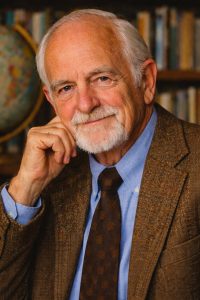
These profiles are part of the Altawell Global Legacy series, dedicated to recognising thinkers whose ideas continue to shape sustainable futures.