Insights

  • Climate Risk and Infrastructure Investment: What Decision Makers Must Know in 2026

    Climate Risk and Infrastructure Investment: What Decision Makers Must Know in 2026

    Introduction

    Climate risk is no longer a distant concern—it is a present financial and strategic reality. Infrastructure investments, once evaluated primarily on economic and technical criteria, are now being reassessed through the lens of climate resilience, regulatory exposure, and long-term sustainability.

    In 2026, decision makers must integrate climate risk into every stage of infrastructure planning, financing, and operation.

    Organisations seeking structured guidance in this area can benefit from strategic approaches such as those outlined in Altawell Global’s Advisory and Consulting services, which support resilience-based investment and sustainability integration.

    The Shift from Environmental Concern to Financial Risk

    Historically, climate change was treated as:

    • An environmental issue
    • A long-term uncertainty

    Today, it is:

    • A financial risk
    • A regulatory requirement
    • A strategic driver of investment decisions

    Global assessments by organisations such as the Intergovernmental Panel on Climate Change (IPCC) have reinforced the urgency of addressing both physical and transition risks associated with climate change.

    Types of Climate Risk Affecting Infrastructure

    Physical Risks

    • Flooding
    • Heatwaves
    • Storm damage
    • Water scarcity

    These risks directly impact infrastructure performance, maintenance costs, and asset lifespan.

    Transition Risks

    • Policy and regulatory changes
    • Carbon pricing mechanisms
    • Technological disruption
    • Shifts in market demand

    Energy transition pathways analysed by organisations such as the International Energy Agency (IEA) highlight how rapidly changing policy and technology landscapes affect infrastructure viability.

    Liability Risks

    • Legal claims
    • Compliance failures
    • Disclosure inaccuracies

    These risks introduce both financial exposure and reputational damage.

    Why Traditional Investment Models Are No Longer Sufficient

    Conventional investment models typically focus on:

    • Capital cost
    • Operational efficiency
    • Return on investment

    However, they often fail to incorporate:

    • Climate variability
    • Long-term resilience
    • Regulatory uncertainty

    This creates a disconnect between projected performance and actual outcomes under climate stress conditions.

    Integrating Climate Risk into Investment Decisions

    1. Climate Scenario Analysis

    Use multiple climate scenarios to assess:

    • Asset vulnerability
    • Financial exposure
    • Long-term performance

    This includes both extreme physical scenarios and transition pathways.

    2. Resilience-Based Design

    Infrastructure must be designed to:

    • Withstand extreme environmental conditions
    • Adapt to changing climate patterns
    • Maintain functionality under stress

    3. ESG Integration in Investment Frameworks

    Investments must align with ESG principles, sustainability targets, and regulatory expectations.

    For broader perspectives on ESG and sustainability integration, explore Altawell Global’s Insights section.

    4. Continuous Monitoring and Adaptation

    Climate risk is dynamic. Organisations must:

    • Continuously monitor environmental conditions
    • Update risk models
    • Adapt operational strategies

    Regulatory and Market Drivers in 2026

    Governments and financial institutions are introducing:

    • Mandatory climate disclosures
    • ESG reporting requirements
    • Net-zero commitments

    Investors are increasingly:

    • Redirecting capital towards resilient assets
    • Penalising high-risk investments

    The Strategic Opportunity

    Organisations that effectively integrate climate risk into infrastructure investment can:

    • Attract long-term investment
    • Enhance asset resilience
    • Reduce operational disruptions
    • Strengthen market positioning

    Climate resilience is no longer optional—it is a core driver of sustainable value creation.

    Key Takeaways for Decision Makers

    • Climate risk must be embedded in investment decisions
    • Infrastructure design must prioritise resilience
    • ESG integration is essential for regulatory alignment
    • Continuous monitoring is required due to evolving risks

    Frequently Asked Questions

    What is climate risk in infrastructure?

    It refers to the physical, transition, and liability risks associated with climate change that impact infrastructure performance and investment value.

    Why is climate risk important for investors?

    Because it directly affects financial returns, regulatory compliance, and long-term asset viability.

    How can infrastructure be made climate-resilient?

    Through scenario analysis, resilient design, ESG integration, and continuous monitoring.

    What sectors are most exposed?

    Energy, transport, water systems, and urban infrastructure are particularly vulnerable.

    This perspective builds on foundational work captured in our Legacy and connects to broader themes explored across Altawell Global Insights. Opportunities to engage or contribute can be found on our Careers page.


    Altawell Global

  • How to Align ESG Governance with AI-Driven Decision Systems in 2026

    How to Align ESG Governance with AI-Driven Decision Systems in 2026

    Introduction

    As organisations accelerate their adoption of artificial intelligence, a critical governance gap is emerging. While AI systems are increasingly used to optimise operations, forecast risk, and automate decision-making, ESG governance frameworks have not evolved at the same pace.

    This misalignment creates strategic, regulatory, and reputational risks—particularly for organisations operating in complex sectors such as energy, infrastructure, and digital systems.

    For organisations seeking structured support in this area, strategic advisory approaches such as those outlined in Altawell Global’s Advisory and Consulting services can play a critical role in aligning governance with digital transformation.

    The Strategic Problem: Disconnected Systems

    Most organisations currently operate with:

    • ESG frameworks focused on reporting and compliance
    • AI systems focused on efficiency and optimisation

    This creates a structural disconnect:

    • AI systems may optimise for cost while increasing carbon intensity
    • ESG reporting may lag behind real-time operational decisions
    • Governance frameworks may not extend to algorithmic accountability

    Global institutions such as the World Economic Forum have increasingly highlighted the risks associated with ungoverned digital transformation, particularly where sustainability considerations are not embedded into decision-making systems.

    The result is not just inefficiency—it is governance failure.

    Why ESG Must Be Embedded into AI Systems

    AI is no longer simply a tool; it is a decision-making engine.

    If ESG is not embedded within that engine:

    • Sustainability becomes reactive rather than proactive
    • Risk management becomes incomplete
    • Compliance becomes fragile under regulatory scrutiny

    Embedding ESG into AI means:

    • Integrating carbon metrics into optimisation models
    • Embedding ethical and governance constraints into algorithms
    • Ensuring traceability of automated decisions

    This aligns with policy directions outlined by organisations such as the OECD, which emphasise responsible AI and governance integration.

    A Practical Framework for ESG–AI Alignment

    Organisations can adopt a structured four-layer framework:

    1. Data Alignment Layer

    Ensure ESG data is:

    • Structured
    • Reliable
    • Integrated with operational systems

    This includes emissions data, supply chain indicators, and energy performance metrics.

    2. Algorithmic Governance Layer

    Define how AI systems incorporate ESG principles:

    • Set sustainability constraints
    • Define optimisation priorities beyond cost
    • Audit algorithmic outputs

    This requires collaboration between technical teams and governance specialists.

    3. Decision Transparency Layer

    Executives must be able to answer:

    • Why was this decision made?
    • What ESG factors influenced it?
    • What are the associated risks?

    Explainable AI becomes essential in this layer.

    4. Strategic Oversight Layer

    Board-level governance must include:

    • AI governance policies
    • ESG integration within digital strategy
    • Accountability for automated decisions

    At this level, ESG and digital transformation become inseparable.

    The Risk of Inaction

    Failure to align ESG with AI systems leads to:

    • Regulatory exposure
    • Loss of stakeholder trust
    • Strategic misalignment
    • Reputational damage

    This is particularly critical in sectors where sustainability performance is closely monitored by regulators and investors.

    The Opportunity: Strategic Advantage

    Organisations that integrate ESG into AI systems gain:

    • Improved decision quality
    • Stronger regulatory positioning
    • Enhanced investor confidence
    • Long-term operational resilience

    This is not merely compliance—it is a source of competitive advantage.

    For further perspectives on sustainability, governance, and digital transformation, explore the latest articles in Altawell Global’s Insights section.

    Key Takeaways for Decision Makers

    • ESG must evolve from reporting to real-time integration
    • AI systems must incorporate sustainability and governance constraints
    • Governance frameworks must include algorithmic accountability
    • ESG–AI integration delivers both risk mitigation and strategic advantage

    Frequently Asked Questions

    What is ESG governance in AI systems?

    It refers to the integration of environmental, social, and governance considerations into the design and operation of AI-driven decision systems.

    Why is ESG–AI alignment important in 2026?

    Because AI increasingly drives operational and strategic decisions, and without ESG integration, these decisions may introduce hidden risks.

    How can organisations start aligning ESG with AI?

    By integrating ESG data into operational systems, defining governance rules for AI, and ensuring transparency in decision-making processes.

    What industries are most affected?

    Energy, infrastructure, finance, and manufacturing sectors are particularly impacted due to regulatory pressure and operational complexity.

    For executive-level publications and further resources, visit Altawell Global’s Books & Publications page.


    This perspective builds on foundational ideas captured in our Legacy and connects to broader themes explored across Altawell Global Insights. Opportunities to engage or contribute can be found on our Careers page.

    Altawell Global

  • From Net Zero to Net Resilient: Rethinking Sustainability in a Volatile World

    From Net Zero to Net Resilient: Rethinking Sustainability in a Volatile World


    In recent years, the concept of net zero has emerged as a central pillar of global sustainability efforts. Governments, corporations, and institutions have aligned their strategies around reducing greenhouse gas emissions, often setting ambitious targets for 2030, 2040, and 2050. While this shift has been necessary and impactful, it has also revealed an important limitation: net zero, as currently framed, is not sufficient to address the complexity and volatility of the modern world.

    The global landscape is no longer defined by predictable transitions. Instead, it is shaped by overlapping crises—climate change, geopolitical instability, energy security challenges, supply chain disruptions, and rapid technological transformation. In such an environment, sustainability must evolve beyond emissions accounting and carbon neutrality. It must become resilient.

    Net resilience represents a broader and more adaptive paradigm. It recognises that systems must not only reduce their environmental impact but also withstand shocks, adapt to change, and continue to function under conditions of uncertainty. This shift requires a rethinking of how sustainability is defined, measured, and implemented.

    At its core, net resilience integrates four interdependent dimensions: robustness, adaptability, intelligence, and governance.

    Robustness refers to the strength and reliability of systems and infrastructure. Energy networks, for example, must be designed to handle variability in renewable generation, extreme weather events, and fluctuating demand. Similarly, supply chains must be structured to absorb disruptions without collapsing. Robust systems are not necessarily rigid; rather, they are engineered to maintain functionality under stress.

    Adaptability extends beyond robustness by enabling systems to evolve in response to changing conditions. This includes the capacity to reconfigure operations, shift resources, and adopt new technologies when required. In the energy sector, adaptability can be seen in the integration of distributed energy resources, flexible grid management, and hybrid energy systems. In organisations, it manifests as agile decision-making and dynamic strategic planning.

    Intelligence is increasingly the defining feature of resilient systems. The integration of digital technologies—such as artificial intelligence, advanced analytics, and real-time monitoring—allows organisations to anticipate risks, optimise performance, and make informed decisions. Decision intelligence platforms, in particular, are transforming how complex systems are managed, enabling a move from reactive responses to proactive and predictive strategies.

    Governance provides the framework within which resilience can be achieved. It encompasses policy, regulation, leadership, and institutional alignment. Effective governance ensures that resilience is embedded across all levels of decision-making, from long-term strategic planning to day-to-day operations. It also facilitates coordination between public and private sectors, which is essential in addressing systemic risks.

    The transition from net zero to net resilient does not replace the goal of emissions reduction; rather, it builds upon it. Carbon neutrality remains critical, but it must be integrated into a broader strategy that accounts for uncertainty, complexity, and systemic risk. A net zero system that fails under stress is not sustainable. A resilient system, however, can maintain progress even in the face of disruption.

    This shift has significant implications for organisations. Sustainability strategies must move from static targets to dynamic capabilities. Risk management must evolve from compliance-driven processes to integrated resilience frameworks. Investment decisions must consider not only environmental impact but also system robustness and adaptability.

    For policymakers, the challenge is to create enabling environments that support resilience. This includes developing regulatory frameworks that encourage innovation, investing in resilient infrastructure, and fostering collaboration across sectors. It also requires a shift in metrics—from narrow carbon accounting to broader indicators of system performance and resilience.

    For industry, the opportunity lies in redefining value. Organisations that embrace net resilience can enhance their competitiveness, reduce risk, and build long-term sustainability. They can move beyond compliance to leadership, shaping the future of their sectors rather than reacting to it.

    Ultimately, the concept of net resilience reflects a deeper understanding of sustainability. It acknowledges that the future cannot be fully predicted or controlled. Instead, it must be navigated through systems that are capable of learning, adapting, and enduring.

    As the world continues to face unprecedented challenges, the question is no longer whether we can achieve net zero. The more pressing question is whether our systems are resilient enough to sustain that achievement. The answer will define the next phase of sustainability.


    This perspective builds on foundational ideas captured in our Legacy and connects to broader themes explored across Altawell Global Insights. Opportunities to engage or contribute can be found on our Careers page.


    Selected Global Perspectives

    For readers interested in exploring the evolving concepts of resilience, sustainability, and system transformation, the following global reports and frameworks provide valuable insights:

    • Intergovernmental Panel on Climate Change (IPCC), Assessment Reports on Climate Change and Adaptation
    • International Energy Agency (IEA), World Energy Outlook
    • World Economic Forum, Global Risks Report
    • United Nations Environment Programme (UNEP), Emissions Gap Report
    • World Bank, Climate and Development Reports
    • McKinsey & Company, Climate Risk and Decarbonisation Insights


    For organisations navigating the transition from net zero to net resilient, this shift requires more than incremental change. It calls for integrated thinking across strategy, technology, governance, and risk.

    Altawell Global supports organisations, institutions, and policymakers in developing resilience-driven sustainability strategies, integrating climate risk, digital intelligence, and system transformation into practical and actionable frameworks.

    For collaboration, advisory, or strategic engagement, please connect with Altawell Global.


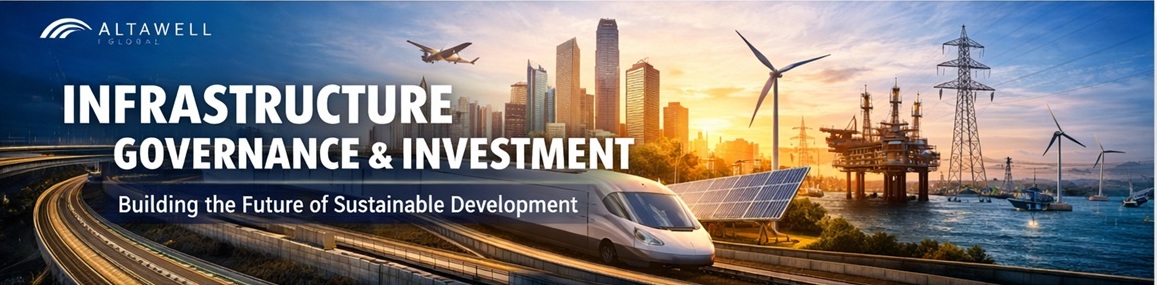
  • Infrastructure Governance and Investment: Strategies for Sustainable Energy Systems

    Infrastructure Governance and Investment: Strategies for Sustainable Energy Systems

    Infrastructure governance and investment play a critical role in shaping sustainable energy systems, particularly in the context of energy transition and ESG strategy.  From transport networks and energy systems to digital infrastructure and water management, modern societies depend on complex and interconnected infrastructure assets that support everyday life and enable long-term prosperity. However, as global economies evolve and the pressures of climate change, urbanisation, and technological transformation intensify, the governance and investment models that guide infrastructure development are undergoing significant change.

    The effectiveness of infrastructure investment is not determined solely by the scale of capital deployed, but by the quality of governance frameworks that guide decision-making, accountability, and long-term strategic planning. Without strong governance structures, infrastructure investments risk becoming inefficient, misaligned with societal needs, or financially unsustainable. As governments, investors, and institutions confront the need for resilient and sustainable infrastructure, governance is emerging as a critical factor in ensuring that infrastructure delivers long-term value.

    The Strategic Importance of Infrastructure Governance

    Infrastructure governance refers to the institutional arrangements, policies, regulatory mechanisms, and decision-making structures that shape how infrastructure is planned, financed, delivered, and maintained. Effective governance ensures that infrastructure development aligns with national priorities, supports economic competitiveness, and delivers reliable services to communities.

    In many countries, infrastructure projects suffer from cost overruns, delays, and underperformance due to fragmented governance systems. When responsibilities are divided among multiple agencies without clear coordination mechanisms, infrastructure planning can become reactive rather than strategic. This often leads to duplicated investments, inefficient allocation of resources, and infrastructure assets that fail to meet long-term societal needs.

    Robust governance frameworks provide clarity in roles and responsibilities across government institutions, regulatory bodies, private sector partners, and financial stakeholders. They also establish transparent procurement processes, strengthen oversight mechanisms, and ensure that infrastructure investments are evaluated against long-term economic, environmental, and social objectives.

    In this context, governance is not merely an administrative function. It is a strategic capability that determines whether infrastructure investments generate sustainable value or become long-term financial liabilities.

    The Changing Landscape of Infrastructure Investment

    Investment strategies for sustainable infrastructure must consider long-term value creation, risk management and alignment with sustainability and ESG objectives. Infrastructure investment has traditionally been dominated by public sector financing. Governments have historically taken primary responsibility for building roads, power plants, water systems, and other essential infrastructure assets. However, the scale of infrastructure demand in the twenty-first century has significantly exceeded the fiscal capacity of many governments.   

    Infrastructure investment strategies must consider long-term value creation, risk management and alignment with sustainability objectives. Organisations must also ensure that investment decisions are supported by robust governance frameworks and strategic planning.   Altawell Global provides strategic advisory services supporting organisations in sustainability and energy transition.

    Global estimates suggest that trillions of dollars in infrastructure investment will be required over the coming decades to support population growth, energy transition, and urban development. This investment requirement has encouraged greater participation from private investors, institutional funds, development banks, and public-private partnership models.

    Private capital is increasingly playing a significant role in infrastructure financing. Pension funds, sovereign wealth funds, and infrastructure investment funds are seeking stable long-term returns from infrastructure assets. These investors view infrastructure as a strategic asset class due to its relatively predictable revenue streams and long operational lifecycles.

    However, attracting private capital requires governance frameworks that provide regulatory stability, transparent procurement systems, and clear contractual structures. Investors are more likely to commit capital when policy environments are predictable and when governance structures reduce regulatory and political risk.

    The Role of Public-Private Partnerships

    Public-private partnerships (PPPs) have emerged as an important mechanism for delivering large infrastructure projects. Through PPP arrangements, governments collaborate with private sector partners to finance, design, construct, and operate infrastructure assets.

    When structured effectively, PPPs can combine the efficiency and innovation of the private sector with the strategic oversight of the public sector. They can accelerate project delivery, distribute financial risk, and enhance operational performance.

    However, PPPs require strong governance oversight. Poorly designed contracts or inadequate regulatory frameworks can result in unbalanced risk allocation, excessive costs to the public sector, or long-term contractual disputes. Successful PPP programmes therefore depend on transparent procurement processes, strong contract management capabilities, and clear accountability structures.

    Governments that have successfully implemented PPP programmes often invest heavily in institutional capacity. Dedicated infrastructure agencies, specialised procurement units, and strong regulatory bodies play an important role in ensuring that PPP projects deliver value for money while protecting public interests.

    Infrastructure Governance and Sustainability

    The growing urgency of climate change has placed sustainability at the centre of infrastructure governance. Infrastructure decisions made today will shape environmental outcomes for decades to come. Energy systems, transport networks, and industrial infrastructure all influence carbon emissions, resource consumption, and environmental resilience.

    As a result, infrastructure governance frameworks increasingly incorporate environmental and social considerations into investment decision-making. This includes integrating climate risk assessments, sustainability criteria, and long-term resilience planning into infrastructure strategies.

    Sustainable infrastructure does not only address environmental concerns. It also strengthens economic resilience by reducing long-term operational risks, improving energy efficiency, and supporting the transition towards low-carbon economies. Governments and investors are increasingly recognising that infrastructure investment must align with broader sustainability objectives if it is to remain viable in the long term.

    Infrastructure governance therefore plays a crucial role in ensuring that infrastructure systems support both economic development and environmental sustainability.

    Digital Transformation and Infrastructure Management

    Digital technologies are also transforming how infrastructure is planned and managed. Advanced data analytics, artificial intelligence, and digital monitoring systems are enabling more efficient management of infrastructure assets.

    Smart infrastructure systems can monitor asset performance in real time, predict maintenance requirements, and optimise operational efficiency. These technologies can significantly reduce lifecycle costs while improving reliability and service quality.

    However, the integration of digital technologies also requires updated governance frameworks. Issues such as cybersecurity, data ownership, and digital infrastructure regulation must be addressed as infrastructure systems become increasingly interconnected.

    Infrastructure governance must therefore evolve to incorporate digital transformation strategies that ensure both technological innovation and system security.

    Towards Integrated Infrastructure Governance

    The complexity of modern infrastructure systems requires integrated governance approaches that move beyond fragmented institutional structures. Infrastructure planning must consider cross-sector interdependencies between energy, transport, water, and digital systems.

    Integrated governance frameworks enable governments to coordinate infrastructure investments across sectors, ensuring that infrastructure systems function as part of a coherent national development strategy. This approach also helps avoid inefficient duplication of infrastructure assets and ensures that investments support broader economic and environmental goals.

    For policymakers, investors, and infrastructure leaders, the challenge is not simply to invest more in infrastructure but to govern infrastructure more effectively. Strong governance systems create the conditions under which infrastructure investments can deliver sustainable economic value, enhance societal wellbeing, and support long-term development objectives.

    As global economies navigate the challenges of energy transition, digital transformation, and climate resilience, infrastructure governance will become increasingly central to national competitiveness and sustainable growth. 

    In conclusion, infrastructure governance and investment are essential for achieving sustainable energy systems and supporting long-term economic and environmental objectives. Strategic alignment between policy, investment and sustainability will remain critical in the coming years. Further insights can be explored through Altawell Global publications.

    This perspective builds on foundational ideas captured in our Legacy and connects to broader themes explored across Altawell Global Insights. Opportunities to engage or contribute can be found on our Careers page.

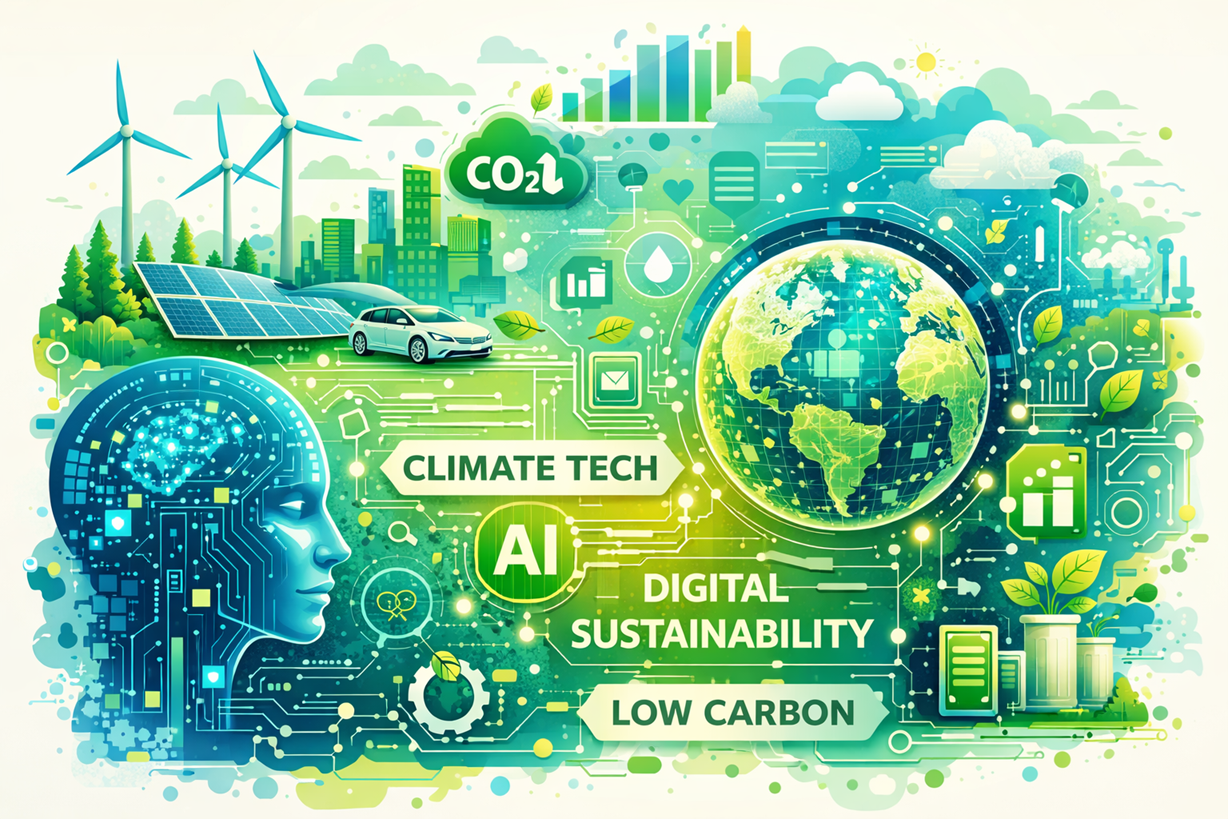
  • ClimateTech, AI and Digital Sustainability: Shaping Intelligent Low-Carbon Systems

    ClimateTech, AI and Digital Sustainability: Shaping Intelligent Low-Carbon Systems

    ClimateTech, artificial intelligence (AI) and digital sustainability are rapidly transforming the way modern energy and environmental systems are designed, managed and optimised. As global economies accelerate towards low-carbon and net zero targets, the integration of intelligent digital technologies has become essential for improving efficiency, reducing emissions and enabling data-driven decision-making.

    The convergence of ClimateTech and AI is creating new opportunities to develop smarter, more adaptive and resilient systems across energy, infrastructure and environmental domains. From predictive analytics and automation to digital twins and advanced optimisation, these technologies are redefining how organisations approach sustainability and long-term value creation.

    This article explores the role of ClimateTech, AI and digital sustainability in shaping intelligent low-carbon systems, highlighting key drivers, strategic applications and emerging challenges in the transition towards a more sustainable and digitally enabled future.

    An integrated pathway towards resilient, intelligent and low-carbon systems

    The convergence of ClimateTech, artificial intelligence and digital sustainability is no longer a speculative trend; it is rapidly becoming one of the defining transformations of the 21st century. Across energy systems, finance, cities, supply chains and environmental governance, digital technologies are now shaping how societies understand climate risk, reduce emissions, protect ecosystems and build long-term resilience. What is emerging is not merely a technological shift, but a systemic reconfiguration of how sustainability itself is designed, governed and delivered.

    ClimateTech has evolved beyond clean energy innovation into a broad ecosystem of solutions aimed at mitigating climate change, enabling adaptation and restoring natural systems. It now encompasses carbon management platforms, climate-risk analytics, smart infrastructure, sustainable agriculture technologies, biodiversity monitoring tools and next-generation materials. Artificial intelligence sits at the heart of this transformation, providing the analytical intelligence and adaptive capability required to operate complex systems at scale. Digital sustainability, meanwhile, provides the strategic and ethical framework that ensures these technologies contribute positively to environmental and social outcomes rather than simply accelerating consumption and inequality.

    Understanding ClimateTech as a systems domain

    ClimateTech is often narrowly associated with renewable energy or electric mobility, but its scope is much wider. It includes technologies designed to decarbonise industrial processes, improve resource efficiency, enhance climate resilience and protect ecosystems. Carbon accounting platforms allow organisations to quantify emissions across complex value chains. Smart grid technologies enable real-time balancing of renewable energy supply and demand. Precision agriculture tools optimise water and fertiliser use while improving yields. Climate-risk platforms support insurers, banks and investors in assessing physical and transition risks linked to climate change.

    What distinguishes modern ClimateTech from earlier environmental technologies is its deep integration with data infrastructures. These solutions depend on continuous streams of data from sensors, satellites, financial systems, logistics platforms and environmental monitoring networks. Without advanced analytics, this data would be unusable at scale. This is where AI becomes indispensable.

    The role of AI as the intelligence layer of sustainability

    Artificial intelligence provides the computational capacity to detect patterns, make predictions and optimise decisions across complex sustainability challenges. Climate systems are inherently nonlinear and interconnected, involving feedback loops between atmosphere, land use, oceans, economic activity and human behaviour. Traditional modelling approaches, while still essential, are increasingly complemented by machine learning models that can process vast datasets and reveal insights not easily captured by conventional methods.

    In the energy sector, AI is enabling more efficient integration of renewables by forecasting generation patterns, optimising storage deployment and predicting demand fluctuations. Grid operators use AI-driven tools to manage decentralised energy resources and reduce the risk of blackouts. In buildings, AI-enabled energy management systems continuously adjust heating, cooling and lighting to minimise energy use while maintaining occupant comfort.

    In climate risk and finance, AI is transforming how institutions understand exposure. Financial institutions are using machine learning models to analyse climate scenarios, assess portfolio vulnerability and integrate climate considerations into credit decisions and investment strategies. Insurers are applying AI to improve catastrophe modelling and claims assessment, allowing for more accurate pricing of climate-related risks.

    In nature and biodiversity, AI is supporting environmental monitoring at unprecedented scales. Satellite imagery analysed with computer vision models is being used to detect deforestation, track illegal mining, monitor coastal erosion and assess ecosystem health. Acoustic AI systems can identify species in forests by analysing soundscapes, supporting conservation efforts with far greater precision than manual surveys.

    Digital sustainability as governance and ethics

    While ClimateTech and AI offer powerful capabilities, their deployment raises critical questions around governance, equity and environmental integrity. Digital sustainability addresses these concerns by focusing on how digital systems themselves are designed, deployed and governed to support long-term societal value.

    One dimension of digital sustainability is the environmental footprint of digital infrastructure. Data centres, blockchain systems and AI training models consume significant energy and water. If left unmanaged, the expansion of digital technologies could undermine the very climate goals they are intended to support. Responsible digital strategies therefore require energy-efficient architectures, renewable-powered data centres, sustainable procurement practices and lifecycle thinking in technology design.

    Another dimension is social sustainability. AI systems used in sustainability contexts influence high-stakes decisions about infrastructure investment, insurance access, urban planning and resource allocation. If these systems are opaque, biased or poorly governed, they risk reinforcing existing inequalities. Digital sustainability therefore requires transparency, explainability, stakeholder engagement and robust governance frameworks that ensure technologies serve the public interest rather than narrow commercial objectives.

    There is also an emerging need for institutional capability. Many organisations invest in digital tools for sustainability reporting or analytics without developing the organisational structures, skills and governance required to use them effectively. Digital sustainability emphasises the importance of aligning technology with strategy, leadership, culture and accountability.

    From experimentation to strategic integration

    The current phase of ClimateTech and AI adoption is characterised by experimentation. Many organisations pilot tools for emissions tracking, climate analytics or ESG reporting, but struggle to scale these initiatives into core decision-making. The challenge is not technological maturity alone, but organisational integration.

    Strategic integration requires organisations to treat digital sustainability as a core capability rather than a peripheral function. This involves embedding climate and sustainability intelligence into enterprise systems, risk management frameworks, investment decisions and performance management processes. It also requires interdisciplinary collaboration between sustainability professionals, data scientists, engineers, finance teams and executive leadership.

    The most advanced organisations are beginning to build internal sustainability intelligence platforms that connect operational data, financial data and environmental data into a unified architecture. These platforms allow decision-makers to explore trade-offs between cost, carbon, risk and long-term value in real time. This represents a significant shift from retrospective reporting towards proactive sustainability governance.

    Altawell Global provides strategic advisory services supporting organisations in sustainability and energy transition.

    Policy, regulation and market dynamics

    The acceleration of ClimateTech and digital sustainability is also being driven by regulatory and market pressures. Governments are introducing more stringent climate disclosure requirements, net-zero commitments and sustainable finance regulations. These frameworks are increasing demand for high-quality data, robust analytics and auditable systems.

    At the same time, investors are demanding more credible evidence of sustainability performance. Greenwashing risks are prompting scrutiny of claims, and AI-enabled verification tools are becoming increasingly important in validating corporate disclosures. Markets are gradually rewarding organisations that demonstrate credible, data-driven sustainability strategies, while penalising those that rely on superficial narratives.

    This creates a reinforcing cycle: regulation increases demand for digital sustainability capabilities, which drives innovation in ClimateTech and AI solutions, which in turn enables more sophisticated regulatory frameworks. Organisations that understand this dynamic are positioning themselves not merely for compliance, but for strategic advantage.

    The future trajectory

    Looking ahead, the integration of ClimateTech, AI and digital sustainability is likely to deepen rather than stabilise. We are moving towards a world in which climate intelligence becomes embedded in everyday decision-making systems. Infrastructure will increasingly be designed with adaptive intelligence. Financial systems will integrate climate risk as a fundamental parameter. Supply chains will be continuously monitored for environmental and social impact. Cities will rely on real-time data to manage resources dynamically.

    However, the direction of this future is not predetermined. The technologies themselves are neutral; it is governance, leadership and values that determine outcomes. Without thoughtful design, these systems could entrench surveillance, inequality and resource exploitation. With responsible stewardship, they offer one of the most powerful pathways available for addressing climate change and building resilient societies.

    For organisations, the imperative is clear. ClimateTech, AI and digital sustainability should not be treated as isolated trends or optional innovations. They represent a new operational paradigm in which sustainability intelligence becomes as fundamental as financial intelligence. Those who invest early in building strategic capability, governance frameworks and organisational alignment will be better positioned to navigate regulatory complexity, manage risk, build credibility and create long-term value.

    For society more broadly, this convergence offers a rare opportunity. It enables a shift from reactive environmental management to proactive, adaptive stewardship of natural and economic systems. It offers tools capable of addressing complexity at scale, but only if they are guided by ethical principles and a clear vision of collective well-being.

    The challenge of our time is therefore not simply to develop more powerful technologies, but to ensure that ClimateTech, AI and digital sustainability evolve as instruments of wisdom rather than acceleration alone.

    Conclusion

    ClimateTech, AI and digital sustainability are shaping the future of intelligent low-carbon systems, providing new opportunities to enhance efficiency, resilience and environmental performance. As organisations navigate the complexities of energy transition, the integration of these technologies will be critical for achieving sustainable and long-term outcomes.

    This perspective builds on foundational ideas captured in our Legacy and connects to broader themes explored across Altawell Global Insights. Opportunities to engage or contribute can be found on our Careers page.

    Further insights can be explored through Altawell Global publications.


    Dr N Altawell

  • Digitalisation and Decision Intelligence in Complex Systems

    Digitalisation and Decision Intelligence in Complex Systems

    Complex systems define much of the modern world. Energy networks, financial markets, global supply chains, healthcare systems, climate governance, transportation infrastructure and digital platforms are all deeply interconnected, dynamic and increasingly difficult to manage using traditional linear approaches. As uncertainty grows and the pace of change accelerates, digitalisation alone is no longer sufficient. What organisations now require is decision intelligence: the structured integration of data, analytics, systems thinking and human judgement to improve the quality of decisions in complex environments.

    This article explores how digitalisation is evolving into decision intelligence, why this matters for complex systems, and what leaders should be thinking about now.

    From digitalisation to intelligent decision-making

    Over the past two decades, digitalisation has focused largely on efficiency. Organisations digitised records, automated workflows, migrated to cloud platforms and deployed enterprise software to reduce cost and increase speed. While these efforts delivered operational benefits, many organisations discovered that having more data did not necessarily lead to better decisions. In some cases, it led to confusion, fragmentation and an overload of dashboards with little strategic clarity.

    Decision intelligence represents the next stage of digital maturity. It is not simply about collecting data, but about structuring decision processes around that data. It combines several disciplines: data science, artificial intelligence, behavioural science, systems engineering, risk analysis and domain expertise. The goal is to create decision environments where complex trade-offs can be understood, uncertainty can be managed, and outcomes can be improved over time.

    In complex systems, this shift is particularly important. These systems are characterised by interdependence, non-linearity, feedback loops and emergent behaviour. Small changes can have disproportionate effects. Historical trends may no longer predict future outcomes. In such environments, intuition alone is insufficient, yet purely automated optimisation can also be dangerous. Decision intelligence aims to bridge this gap.

    Understanding complexity in modern systems

    Complex systems behave differently from simple or complicated systems. In a simple system, cause and effect are obvious. In a complicated system, such as a jet engine, cause and effect can be understood through expert analysis. In a complex system, however, outcomes emerge from interactions between multiple actors and variables, and the system evolves over time.

    Consider the energy transition. It is not merely a technical challenge of replacing fossil fuels with renewables. It involves regulatory shifts, geopolitical dynamics, social acceptance, infrastructure constraints, market design, investment behaviour and climate risks, all interacting simultaneously. A policy change in one country can affect commodity prices globally. A technological breakthrough can alter investment flows. A social backlash can slow deployment.

    Traditional decision models struggle in this environment because they assume stability and predictability. Decision intelligence approaches instead focus on adaptability, scenario exploration and continuous learning.

    The role of digitalisation as an enabler

    Digitalisation provides the infrastructure upon which decision intelligence can operate. Sensors, Internet of Things technologies, enterprise platforms, digital twins, cloud computing and data integration tools generate and manage the data required to understand complex systems. However, infrastructure alone does not create intelligence.

    The critical question is not how much data an organisation has, but whether that data is structured around decisions. High-performing organisations increasingly design their data architecture starting from key decisions rather than from available technologies. They ask: what decisions matter most? What information is needed to make those decisions well? How can feedback be captured to improve future decisions?

    This decision-centric approach marks a significant cultural shift. It moves digitalisation away from being an IT project and towards being a strategic capability.

    Decision intelligence in practice

    In practice, decision intelligence involves several interconnected elements. First, it requires clear definition of decision contexts. For example, in infrastructure investment, the decision may involve balancing financial returns, environmental impact, stakeholder acceptance and long-term resilience. Each of these dimensions must be explicitly modelled rather than treated implicitly.

    Second, it involves the use of advanced analytics and AI where appropriate, not as replacements for human judgement but as augmentation tools. Predictive models can estimate likely outcomes, but scenario-based models are often more valuable in complex systems because they allow leaders to explore multiple plausible futures rather than relying on a single forecast.

    Third, it requires transparency. Black-box algorithms may optimise narrow metrics while ignoring broader systemic consequences. Decision intelligence frameworks emphasise explainability, allowing decision-makers to understand why a recommendation has been generated and what assumptions underpin it.

    Finally, it depends on governance. Decision intelligence is not only technical; it is organisational. It requires clarity about accountability, ethical boundaries, risk tolerance and escalation pathways. Without governance, even the most advanced tools can amplify poor decisions rather than improve them.

    Strategic implications for leaders

    For senior leaders, digitalisation and decision intelligence raise strategic questions that go beyond technology investment. One key issue is capability development. Many organisations invest heavily in tools but underinvest in skills. Decision intelligence requires individuals who can think across disciplines: professionals who understand data but also understand systems, behaviour, economics and strategy.

    Another issue is organisational design. Complex systems require decentralised decision-making, yet many organisations remain highly hierarchical. Decision intelligence can support distributed autonomy by providing shared data, models and decision frameworks, but only if the culture supports trust and learning rather than control.

    There is also the issue of ethics and responsibility. As decisions become increasingly influenced by algorithms, organisations must consider the societal impact of those decisions. In sectors such as finance, healthcare, energy and public policy, the consequences extend far beyond internal performance metrics. Responsible decision intelligence requires explicit attention to fairness, inclusion, resilience and long-term impact.

    The future: towards adaptive, learning organisations

    The most advanced applications of decision intelligence point towards a future in which organisations function as adaptive systems. Rather than relying on static strategies reviewed annually, they operate with continuous feedback loops. Decisions are treated as hypotheses to be tested. Data is used not only to optimise performance but to learn about the system itself.

    Digital twins of complex systems, such as cities, energy grids or supply networks, will increasingly allow decision-makers to simulate interventions before implementing them in the real world. However, the value of these tools will depend not on their technical sophistication alone, but on how wisely they are integrated into governance and leadership practice.

    Ultimately, digitalisation and decision intelligence are not about technology. They are about how organisations think. In a world of growing complexity, competitive advantage will belong to those who can make better decisions under uncertainty, learn faster from outcomes and adapt more intelligently to change.

    Those who treat digitalisation as a technical upgrade will remain overwhelmed by data. Those who embrace decision intelligence as a strategic discipline will shape the future of their systems rather than merely react to it.

    This perspective builds on foundational ideas captured in our Legacy and connects to broader themes explored across Altawell Global Insights. Opportunities to engage or contribute can be found on our Careers page.